
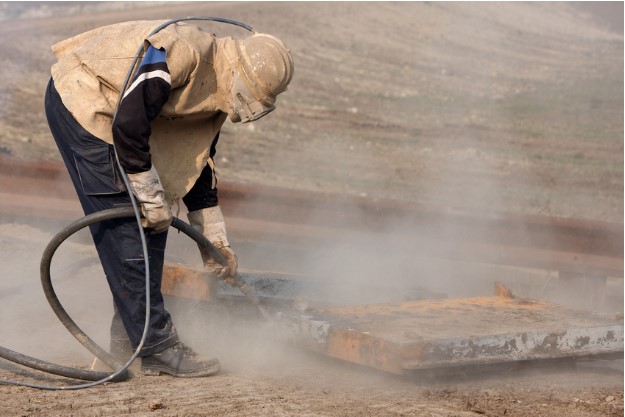

Sandblasting is a powerful cleaning and surface preparation technique used in various industries. It involves blasting fine sand or other abrasive materials at high speed to clean, smooth, or shape a surface. This method is widely used for cleaning metals, wood, concrete, and even glass.
Many industries, including construction, manufacturing, and automotive, use sandblasting to remove rust, paint, and dirt from surfaces. In this article, we will discuss five major advantages of sandblasting and why it is such an effective method.
1. Effective Surface Cleaning
One of the biggest benefits of sandblasting is its ability to clean surfaces thoroughly. Dirt, rust, paint, and other unwanted materials can make surfaces look old and damaged. Sandblasting removes these impurities quickly and efficiently, leaving the surface clean and smooth.
Unlike manual cleaning methods, which can be time-consuming and difficult, sandblasting reaches even the hardest-to-clean areas. It is commonly used on metal surfaces to remove rust and corrosion, making them ready for painting or coating.
2. Increases Surface Adhesion
Another important advantage of sandblasting is that it improves the adhesion of coatings, paint, or sealants on surfaces. A smooth or dirty surface may not allow paint or other coatings to stick properly. This can lead to peeling, cracking, or chipping over time.
By using sandblasting, the surface becomes rougher and cleaner, allowing coatings to bond more effectively. This is why sandblasting is widely used before painting cars, metal structures, and industrial equipment. A well-prepared surface ensures that the coating lasts longer and looks better.
3. Time-Saving and Efficient
Sandblasting is a fast and efficient method compared to traditional cleaning techniques. Scraping, sanding, or chemical cleaning can take hours or even days, especially for large surfaces. Sandblasting, on the other hand, completes the job in a fraction of the time.
This makes it a great option for large-scale projects where time is important. Factories, shipyards, and construction sites use sandblasting to speed up their work. Since it quickly removes unwanted materials, workers can move on to the next step without delay.
4. Eco-Friendly and Chemical-Free
Unlike some cleaning methods that require strong chemicals, sandblasting is mostly chemical-free. It relies on natural abrasives like sand, glass beads, or baking soda to clean surfaces. This makes it an eco-friendly option, as it does not release harmful fumes or toxic waste into the environment.
Many industries prefer sandblasting because it reduces the need for harsh cleaning chemicals. This also makes it safer for workers, as they do not have to deal with dangerous substances. With proper safety equipment, sandblasting is a safe and environmentally friendly process.
5. Restores and Extends the Life of Materials
Over time, surfaces can become dull, rusted, or covered in layers of old paint and dirt. Sandblasting helps restore these materials to their original condition by removing the damaged outer layer. This makes old surfaces look new again, saving money on replacements.
For example, in the automotive industry, old car parts can be sandblasted to remove rust and prepare them for repainting. Similarly, buildings and bridges can be sandblasted to remove dirt and stains, making them look fresh again.
Conclusion
Sandblasting is an effective and reliable method for cleaning and restoring surfaces. It removes dirt, rust, and paint quickly, improves surface adhesion, and saves time. Additionally, it is an eco-friendly process that does not rely on harsh chemicals.
By using sandblasting, industries can extend the life of materials and ensure better quality in their projects.