
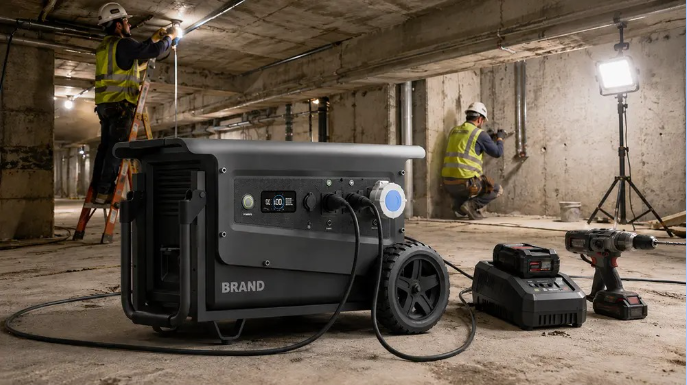

Outdoor home improvement projects can be exciting, but they also come with challenges that are not always present when working inside the house. A homeowner may have the right tools, enough materials, and a carefully planned schedule, yet the project can quickly become difficult when there is no convenient source of electricity nearby.
Deck repairs, landscaping, fence installation, shed renovations, exterior painting, and backyard construction often require power tools and supporting equipment. Work lights, chargers, fans, and other electrical devices may also become necessary as the project progresses.
The problem is that outdoor work areas are rarely arranged around electrical outlets. Long extension cords can help in some situations, but they can also limit movement and create unnecessary clutter. A portable power station provides another way to bring usable electricity directly to the location where the work is being performed.
Outdoor Renovation Requires Careful Preparation
A typical outdoor renovation can involve more electrical equipment than homeowners initially expect. A simple project might begin with a cordless drill and eventually require saws, sanders, lighting, chargers, or other tools.
The location of the work matters just as much as the tools themselves. An outlet near a garage may be useful for one project but completely impractical when the work is happening at the other end of the yard.
Extension cords can bridge the distance, but long cables running across lawns, driveways, patios, or walkways can make the workspace harder to manage. They may also restrict where tools can be placed.
Portable power changes this arrangement by allowing the electricity source to move closer to the project.
Weather Adds Another Layer of Complexity
Outdoor work is naturally affected by changing weather. Rain, humidity, heat, cold, wind, and dust can all influence how a project should be organized.
This is especially important when electrical equipment is involved. A power station designed for outdoor use still has specific operating conditions and limitations. Homeowners should never assume that a weather resistant product can safely operate in every environment.
Protection ratings can provide useful information. An IP rating, for example, describes protection against certain levels of dust and water exposure. Understanding the rating is more useful than simply assuming that a product described as outdoor ready is completely waterproof.
Before taking a power station outside, users should review the manufacturer’s instructions regarding water exposure, operating temperatures, charging, placement, and storage.
Match Power Output to the Tools
Choosing the right power station starts with understanding the electrical requirements of the project.
Small tools may have relatively modest power demands, while equipment such as circular saws, grinders, pumps, compressors, and shop vacuums can require substantially more electricity. Motor driven equipment may also draw additional power during startup.
For this reason, homeowners should check both the running and starting requirements of their equipment. A power station’s continuous output and peak output can both be important when deciding whether it is suitable for a particular project.
Battery capacity should also be considered. Output determines how much electricity the unit can deliver at once, while watt hour capacity provides an indication of how much stored energy is available.
A larger output rating does not automatically mean that a unit will operate tools for a longer period. Both factors need to be considered together.
Portable Lighting Makes Evening Work Easier
Outdoor projects do not always finish before sunset. A job can take longer than expected, or a homeowner may simply prefer to work during the evening after regular work hours.
Portable lighting can make these situations much easier to handle. Lights can be positioned around decks, walkways, entrances, garages, sheds, and other areas where visibility may be limited.
Good lighting is not simply about convenience. It can also make it easier to see tools, materials, uneven surfaces, and potential obstacles around the work area.
With a portable power source nearby, homeowners can place compatible lights exactly where they are needed without relying entirely on permanent outdoor electrical connections.
Bring Electricity to Remote Areas of the Property
Some outdoor projects are located far away from the home’s main power sources. A detached workshop, garden area, shed, or new backyard structure may have no convenient electrical outlet.
This is where portability becomes particularly valuable. Rather than building the entire project around the location of an outlet, workers can move the power source to the area where the work is taking place.
For contractors and DIY homeowners, this flexibility can make temporary jobsites easier to organize. Tools, lights, chargers, and other equipment can be arranged around a central power source instead of being spread across the property.
Weather Protection Should Be Taken Seriously
Outdoor electrical equipment needs appropriate protection from environmental conditions. Dust and moisture are two common concerns, especially during construction, landscaping, and exterior repair projects.
For situations where additional protection is important, a Waterproof Industrial Power Station can be worth considering.
However, weather protection should always be understood in the context of the manufacturer’s specifications. For example, SOUOP’s 5000W waterproof model is listed with an IP54 protection rating and is designed for industrial and outdoor applications. The manufacturer also advises users to avoid heavy rain and direct sunlight.
This distinction matters. Weather resistant equipment can provide useful protection, but it does not remove the need for sensible precautions. Electrical equipment should never be placed in standing water or exposed to conditions outside its specified operating limits.
Heat and Moisture Are Not the Only Concerns
Weather preparation involves more than checking whether rain is expected.
High temperatures can affect equipment, while extremely cold conditions can also influence battery performance. Humidity and condensation may create additional concerns for electrical connections and charging equipment.
Before starting an outdoor project, homeowners should review the recommended operating and storage temperatures for their particular power station.
The unit should be placed on a stable, suitable surface and kept away from areas where water can collect. Connections should also be kept clean and protected when they are not being used.
These simple precautions can help maintain equipment and reduce avoidable problems during a long renovation project.
High Output Can Make Tool Management Easier
A high output portable power station can provide greater flexibility when several compatible devices are needed at the same jobsite.
Instead of repeatedly moving equipment between outlets or changing which tool is connected, a suitable power station can act as a centralized source of electricity.
Of course, the total electrical load still needs to remain within the unit’s rated capacity. Connecting several high demand tools at once can quickly increase power consumption.
Homeowners should therefore calculate the expected load before using multiple devices simultaneously. This helps ensure that the power station is being used within its intended limits.
Portable Power Can Also Help During Outages
An outdoor renovation project can be interrupted by an unexpected power outage. Even if the project itself is outside, the homeowner may still depend on household electricity for lights, chargers, communication devices, or other equipment.
A portable power station can provide temporary backup power for compatible devices. This can be especially useful when an interruption occurs during an important stage of the project.
Some high capacity units also support multiple charging methods, which can provide additional flexibility during longer projects.
For example, the SOUOP 5000W model has a listed 5,040Wh battery capacity and supports multiple charging options. These features can be useful when a project requires substantial stored energy or when access to conventional charging is limited.
Consider Portability Before Choosing a Large Unit
A high output power station can provide significant advantages, but homeowners should also think about how the unit will be moved around the property.
Larger power stations can be considerably heavier than compact models. Handles, wheels, dimensions, and terrain all influence how easy a unit is to transport.
A wheeled system may be convenient on a paved driveway or patio but more difficult to move across rough ground or grass. Considering the actual work environment before purchasing can prevent an otherwise suitable power station from becoming difficult to use.
The ideal choice should offer enough power and battery capacity without becoming impractical for the jobsite.
Plan for Changing Conditions
Weather forecasts can help homeowners plan outdoor projects, but conditions can change during the day. A project that begins under clear skies may face rain or extreme heat several hours later.
Having a weather plan is therefore just as important as having the right tools.
Power equipment should be placed somewhere appropriate, charging equipment should be protected, and work should be paused whenever conditions become unsafe. The manufacturer’s instructions should always take priority over assumptions about what a weather resistant device can handle.
Good preparation allows homeowners to make better decisions without unnecessarily putting equipment or people at risk.
Final Thoughts
Outdoor home improvement requires flexibility. The work may take place across different parts of a property, often without convenient access to permanent electrical outlets. Extension cords can help, but they are not always the most practical solution for every jobsite.
A portable power station can bring electricity closer to the work area, support compatible tools and lighting, and provide additional backup when conventional power is unavailable.
When selecting a unit, homeowners should consider output, battery capacity, charging options, portability, environmental protection, and the specific requirements of the tools they plan to use.
For larger outdoor projects that require substantial power and stored energy, a Power Station 5000w can be a practical option. Choosing equipment that matches the project’s actual demands can make outdoor renovation work easier to organize and better prepared for changing conditions.